
For lighting stores, brands, fixture manufacturers and distributors
Sell track-light systems with Modular Configurator.
Use Modular Configurator for heads, tracks and connectors in one arrangement, and the Configurator for finishes, shades and variants of decorative fixtures. Standard Shopify products can hand off the corresponding variants and quantities to purchase.
- Show heads, tracks and connectors together
- Explain fixture details and mounting styles
- Pair product visuals with photometric information
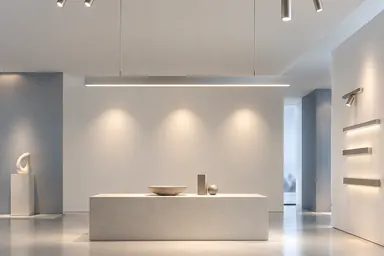
Choose the fixture and complete its companion parts
Use cross-product configuration for track systems and variant selection for decorative fixtures. Both start from offered products; add technical explanations and installation guides when needed.
Core solution01
Select heads, tracks and connectors as a complete arrangement
How it supports lighting sales
Make tracks and companion parts a specific recommendation alongside the head, helping buyers identify a complete arrangement and add its Shopify variants and quantities together.
How the solution works
Add separately sold tracks, heads and connectors to a merchant-prepared scene showing established combinations. Shopify can add each product variant and quantity to the cart together.
Capabilities used
- Cross-product selection
- Placement and connection rules
- Combined product list
Core solution02
Compare finishes and shades to choose a specific fixture variant
How it supports lighting sales
Use appearance differences and less-photographed angles to support a specific selection linked to its Shopify variant.
How the solution works
Rotate the same pendant or wall light, switch offered finishes, shades and appearance variants, and inspect its rear, underside and mounting area.
Capabilities used
- Options on one product
- Valid combinations and variants
- Configuration handoff
Add the right products for further needs
Add material presentation, product selection, explanations or instruction to support further sales and handover needs.
Adjustment and photometric information: explain fixture differences
How it supports lighting sales
Give designers inspectable product information and dealers a basis for explaining functions and price differences, using brand-provided photometric figures.
How buyers can understand the lighting product
Use prepared motion for head adjustment, shade and body construction, with brand-provided photometric information and dimensions at the relevant parts.
Capabilities used
- Features and dimensions
- Structure and action explanations
Installation and use: explain connections step by step
How it supports lighting sales
Turn repeated location and sequence explanations into consistent handover and support guidance, with electrical work following manufacturer requirements.
How buyers can understand the lighting product
Organize approved mounting, component connection and operating steps with prepared animation, component visibility and cameras, so dealers and professionals can pause and revisit them.
Capabilities used
- Steps and instructions
- Animation and part visibility
- Controlled teaching progress
Connect lighting combinations to inquiries and quotes
Standard Shopify purchasing uses store product information. Choose services for dealer-system handoff or project pricing and manufacturing materials.
Dealer orders: pass fixtures, variants and quantities
How it supports the business
Let sales receive the selected arrangement and continue with compatibility, supply and order confirmation. Validate events, result fields and receiving systems for the project.
When and how to use the service
Assess Integrations & API to pass modular selections, variants and quantities to an existing dealer inquiry or ordering system. A standalone link or standard SDK embed can provide the initial presentation.
Assessment inputs and delivery scope
Provide dealer pages, product fields and receiving interfaces; deliver the agreed embed or business integration.
Capabilities used
- Business integration projects
Project quoting: include quantities and process rules
How it supports the business
Extend selections into a reviewable project quote and agreed material output. Define pricing and approval scope, with electrical design based on professional documentation.
When and how to use the service
Use Quote & Realtime BOM when volume discounts, special processes or manufacturing materials affect quotations, assessed against the lighting factory’s pricing and material rules.
Assessment inputs and delivery scope
Provide prices, quantity discounts, process rules and sample BOMs; deliver corresponding pricing and material mapping.
Capabilities used
- Pricing rule assessment
- Manufacturing BOM mapping
- Approval and system handoff
Why is the fixture choice not a complete purchase?
Companion parts, product proportions and technical information create three different decisions.
The light head is chosen, but companion parts are unclear
Tracks, adapters, power connections and mounts sit across a catalog. Buyers struggle to connect the part names to a complete arrangement.
Dimensions do not explain the fixture silhouette
How deep is the pendant, what is inside the shade, and how does the wall light sit against the wall? A single angle leaves these questions open.
A rendered appearance can be mistaken for lighting performance
Appearance, light distribution and measured illuminance are different information. Attractive visuals alone do not explain beams, adjustment and mounting requirements.
From one light head to a track arrangement
Present an established series; professionals determine quantities, placement and illuminance for the actual project.
Understand the track and heads
See where the track, heads and connectors sit in the arrangement.
Choose finishes and companion parts
Compare fixture variants and add separately sold, pre-confirmed companion products.
Review distribution and mounting
Review manufacturer photometric information and mounting steps before confirming the application with sales or specialists.
Retail combinations, professional information
Give product purchasing and professional selection information suited to each task.
Shopify lighting and accessory stores
Use variant configuration for decorative lights and modular combinations for track ranges. Connect established companion products to the cart and explain adjustment and mounting below.
Lighting brands, manufacturers and project distributors
Use standalone links to introduce construction, companion ranges and adjustment before discussing photometric information and project requirements. Purchasing is not included.
Use 3D for form, parts and motion. Confirm illuminance, glare, color-temperature performance and electrical compatibility using product data and professional design, rather than inferring them from renders.
Choose products and a publishing route for one lighting system
Bring tracks, heads, connectors, offered variants and installation information. Define the products for configuration, then quote manuals, guides, content preparation and any dealer integration.